In this post, we’ll look at some of the most nerve-racking bridges in America. What we look at are structures like the giddying Chesapeake Bay Bridge, the isolating Lake Pontchartrain Causeway , and the deliberately swaying Mackinac Bridge. Find out why these technological wonders are so scary, and get expert advice on how to face the fear—and make it across.
An incredible network of bridges spans the United States — more than 600,000 of them. Most are functional, forgettable spans of concrete — but some are famous not for their beauty but the extreme anxiety they inspire. Reaching unimaginably high in the gloomy sky, these monster buildings challenge both engineering and sanity, making a daily commute anything but easy.
For millions, besting one of these giants — through sheer height, length as long as an endless precipice or structural idiosyncrasy — offers a supreme test of will against that most primal of fears: falling to your doom, drowning and even hanging impossibly in the void. This full-length guide, based on architectural data and driver-reported experience, covers the bridges of gephyrophobia, America's most intense.
1. Chesapeake Bay Bridge, Maryland
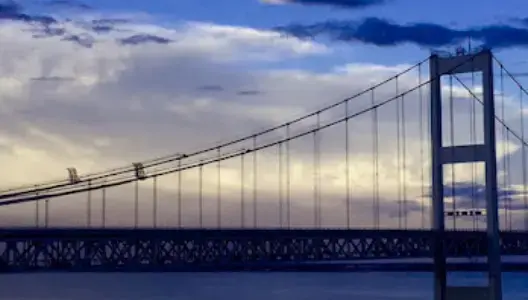
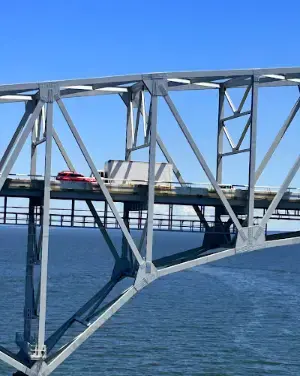
Known as the Governor William Preston Lane Jr. Memorial Bridge, or simply the Chesapeake Bay Bridge, this drive is often cited in lists of the most terrifying roads in existence, and with good reason. It’s a bridge that wasn’t just built to span Maryland’s Western and Eastern Shores, but to separate the brave from the terrified.
Colossal Profile and Dangerous Geometry
The bridge, which is 4.3 miles long, consists of two parallel sections: the original span (built in 1952) and a newer one (added in 1973). And yet that’s only a fraction of it, for it’s the actual height and shape that also seem to trigger panic.
Giddy Elevation: At the highest point, the bridge soars 186 feet (57 meters) over the bay’s central shipping channel. The long, steep ascent offers drivers a frightening view that appears to fall away suddenly into open air.
Narrow Lanes and Low Barriers: The bridge has two lanes that are relatively narrow with next to nothing in the way of a shoulder. The problem is compounded by the low-ish concrete barriers, which seems infinitesimal in height in relation to the colossal drop and provide drivers with scant psychological protection.
Weather Risk: The bridge is infamous for the high winds it endures. Fog can roll in quickly, blotting out visibility without warning; high winds are common, which makes the narrow lanes feel even more tenuous.
Real World Experience: The Drive-Over Service
The greatest proof of this bridge's awesome power is the local industry that it generated. (Some companies, such as Kent Island Express provide a professional service to get nervous or phobic drivers across the bridge in their own vehicle). This is not a novelty; it’s a necessary service that millions of people rely on every day and they cannot physically travel for. This visceral, gut experience is the essence of the Chesapeake Bay Bridge’s chilling power.
2. The Mackinac Bridge, Michigan
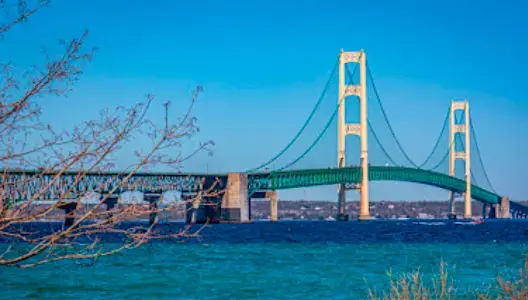
Connecting Michigan’s Upper and Lower Peninsulas, the Mackinac Bridge, also known as “Mighty Mac,” spans 5 miles (8 km) across the Straits of Mackinac. It’s the longest suspension bridge between anchorages in the Western Hemisphere, and, like any proposition that large, it feels ominous to approach — but also it looks fearsome.
The Science of Scare: Motion and Grates
Unlike the Bay Bridge, the fear here is less a sheer vertical drop and more about motion and wind.
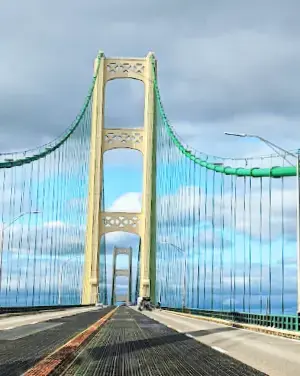
Meant to Move: The Mackinac Bridge is engineered for its extreme environment, which includes high winds and enormous sheets of ice in the Great Lakes. To accommodate for high winds, the structure is supple — the center span can drift up to 35 feet (10.7 meters) in either direction from its position over the rail. Though it is well built, the sight of this deliberate motion in strong winds is petrifying to numerous drivers.
Open Grating Sections: some long sections of the bridge are built with open steel grating to let wind and snow go through. When they drive over those segments, drivers can see water rushing hundreds of feet beneath them; a frightening experience for anyone with visual vertigo.
The Wind Factor: It’s not uncommon for the winds on the bridge to surpass 30 mph. Coupled with the relatively narrow lanes, this makes the driver feel extremely exposed and unstable; just one of the reasons why 1989 saw a car accidentally blown over that low railing.
💡 Engineering Insight: The Mackinac Bridge is designed to be flexible. It's a feature not a flaw. The fact that wind and heat buffering makes it a flexible structure is in apparent, defending itself against potential collapse. The engineering acumen behind the structure is why it is still an authoritative, if terrifying, intermediary.
3. Lake Pontchartrain Causeway, Louisiana
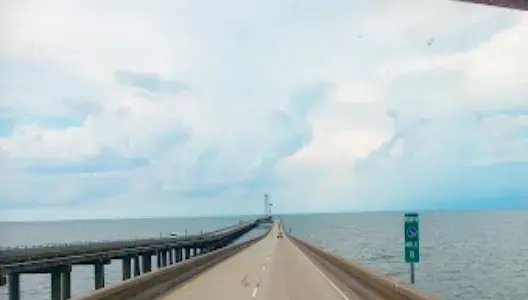
The mental marathon that is the Lake Pontchartrain Causeway. Running nearly 24 miles (38.6 kilometers) across Lake Pontchartrain, the bridge holds a Guinness World Record for the longest continuous bridge over a body of water.
Isolation and the Aquaphobia Trigger
The fear here is isolation and the lack of a visual horizon to orient oneself to.
Land Disappears: At about 8 mi (13 km) into the journey, you lose sight of the shorelines altogether across the horizon. It was just the two-lane concrete slab, me and the dogs, with its low barrier and open water in every direction for eight miles. The isolation creates severe panic attacks in some drivers, who have made one of the most common manifestations of aquaphobia-gephyrophobia.
Low Clearance: The bridge is just 16 feet (4.9 meters) above the lake. This diminishes the fear of falling from a great height and increases one's sense of vulnerability to the water itself and, that is for drawing on top of it will feel as if they are going to hit something or stopping abruptly.
Putting People First: The Causeway Commission knows that psychologically its structure is stressful. Police are often forced to come and save panicked drivers who pull over without completing the crossing. The bridge's utilization problem is the direct consequence of not addressing this particular aspect of human fear.
4. Sunshine Skyway Bridge, Florida
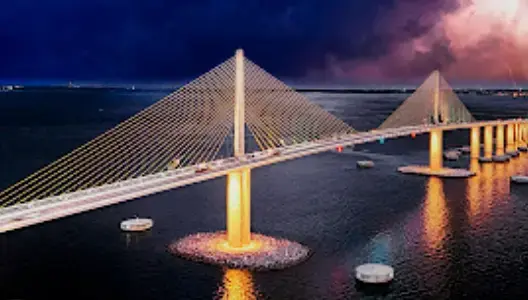
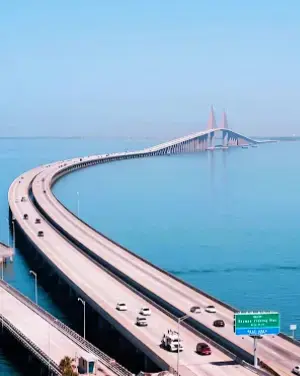
The Bob Graham Sunshine Skyway Bridge is pictured connecting St. Petersburg and Terra Ceia, Florida and spanning Tampa Bay. Aesthetic +1 The stunning yellow cable stays were one-up for strength and stability over a structure that only stood because it too had been mostly destroyed in one of the U.S.'s worst maritime disasters.
Steep Ascent and Traumatic History
The skyway fearOne of the things that I’ve never really been able to pinpoint is why exactly people are afraid of going on a skyway.
Steep and High: The central cable-stayed span rises 430 feet, so there’s a major climb. It's a breathtaking view from the top but also a mind-scrambling one — you really lose your perspective on the sickening verticals.
The Tragedy of 1980: The current building’s haunted-house reputation is in part because of its predecessor. In 1980, a freighter struck a support pier during a sudden storm, damaging the bridge and sending vehicles — including a bus carrying commuters home after work — tumbling into the bay, killing 35 people. Unlike the modern bridge, which is joined with huge concrete barriers, fender systems and a vastly improved foundation to prevent another disaster from happening again, there’s no getting away from that traumatic history.
Weather and Wind: The fact that it’s a tall bridge means it can get pretty windy up here, and Virginians with Florida Polytechnic students will commonly have trouble getting to their children when the weather gets bad (so far the worst was tropical storm Colin).
Credibility and Transparency: The stupidity of the bridge’s construction being such a target in council debates has however sparked a far greater resonance across public opinion: this will be safe – is put up there as gospel due to the death toll from what was done previously.
5. Captain William Moore Bridge, Alaska
The fear that the Captain William Moore Bridge inspires on the Klondike Highway, near Skagway, Alaska, is different; it’s geological.
The Fault: The first bridge was constructed directly upon a large, active earthquake fault line. The original version, built in 1976, was structurally special because it was fixed at just one end. The engineers believed that should an earthquake occur and the ground on either side continue to shift, this single flexible anchorage would keep the bridge from being torn away.
Modern Update: Where the one end anchorage represented some kind of beautiful, minimalist feat of engineering, this footbridge (it was constructed in 2019) uses modern cable stayed technology to link across the chasm more safely and sturdily but with the fault line’s memory and geological context being really what gives this bridge its fear factor.
Gephyrophobia Monster: The Realistic Way to Tackle the Crossing
Confronting one of America’s most terrifying bridges takes preparation and mental fortitude. They are reflections of some of the common-sense strategies suggested by behavioral therapists, and the professional drivers who navigate these spans daily:
Mental Prep: Accept you are scared, Fear does not rule you. Practice controlled breathing (in for 4, hold for 4, out for 6) on your way to the tollbooth.
Traffic Tip: Stay in the middle lane as much as you can. This increases the apparent distance from the railings and water-line/chasm below, which limits visibility.
Eyes Look At: Do not look at the water or how high up you are. Stare only at the taillights of the car in front, or right down at the white lines under your hood. Your attention must be concentrated on the path directly in front of you.
Prepare for Wind: If you are operating a high-profile vehicle (RV, semi-truck), be sure to always monitor local wind advisories. Many governments restrict certain vehicles during high-wind events to protect against danger. I—recommend you do not cross under high wind either.
Use the service: For both the Chesapeake Bay and Mackinac Bridges, be forthright regarding your fear and pay to use the professional drive-over services. It is practical not weak to accept a safe alternative.
These terrifying bridges are not just practical infrastructure — they’re testaments to human determination to surmount even the most treacherous of natural obstacles. Each bridge, whether it’s the swaying span of the Mighty Mac or the seemingly infinite expanse of the Lake Pontchartrain Causeway, is a masterstroke of engineering know-how combined with one heckuva massive psychological test. They serve a reminder that the biggest obstacles in travel are often not physical ones, but mental.
Sandaru Peiris is a traveler who’s explored 20+ countries over 6 years, sharing practical tips for affordable adventures. Based in Sri Lanka, Sandaru’s expertise in finding deals has been featured in Travel Pulse and guest posts on Nomadic Matt. Follow Sandaru’s journeys on Instagram @TripTrait for the latest budget travel hacks.
Dreaming of Sri Lanka's ancient temples and the Maldives' turquoise lagoons? Timing your trip right makes all the difference. Read our complete 2026 guide covering the best months to visit, weather patterns, peak vs off-season, and money-saving travel tips.
Wondering if Rome is safe for solo female travellers? From the Colosseum to Trastevere, Rome is absolutely doable alone with the right preparation. Read our honest 2026 guide covering safe areas, transport tips, and what to watch out for.
Planning a solo trip to Asia? Discover the safest solo traveller destinations in 2026 – from the peaceful streets of Japan to world-class safety credentials of Singapore