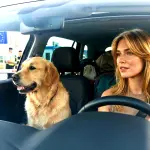
For millions of dog owners, leaving a beloved pet behind during a trip to Europe is simply not an option. Flying with a dog can be stressful, expensive, and for larger breeds, completely impossible in the cabin. The good news is that there are excellent alternatives, and knowing how to get a dog to Europe without flying opens up some of the most enjoyable and stress-free travel experiences you and your four-legged companion can share. This complete guide covers every non-flying route available, from pet-friendly ferries and Channel Tunnel car trains to cross-continent road trips, along with all the documents, vaccinations, and practical tips you need to make the journey smooth and legal.
Why Travel to Europe With Your Dog Without Flying?
Flying a dog to Europe is not just stressful — for many breeds and sizes, it is simply not possible. Most airlines restrict dogs to the cargo hold for international flights, which can be dangerous and deeply distressing for animals. Brachycephalic (flat-faced) breeds such as Bulldogs, Pugs, and French Bulldogs are outright banned from cargo holds on many airlines due to respiratory risks. And even when cabin travel is permitted, it is usually limited to tiny dogs under 8–10kg.
Travelling overland or by sea with your dog avoids all of these problems. Your dog stays with you or nearby throughout the journey, the experience is far less stressful for the animal, and in many cases it works out cheaper than flying — particularly when you factor in pet transport fees, specialist pet cargo documentation, and the cost of airline-approved carriers. For many dog owners, it is simply the better, kinder, and more enjoyable choice all around.
Option 1 — Ferries to Europe That Allow Pets
The most common way to take a dog to Europe without flying is by ferry. Several large ferry companies offer pet-friendly services from the UK to continental Europe that are pet-friendly, with reasonable amenities for hounds and their people.
The Gold Standard for Pet Travel: Brittany Ferries
Brittany Ferries is the most well-known name when it comes to taking a dog to Europe on a ferry, and for very good reason. Their pet policy is among the best among European ferry companies, being very dog-friendly and offering multiple routes across, directly linking the UK, France, and Spain.
Brittany Ferries key routes for canine corps:
- Portsmouth to Caen (Normandy): Classic route, takes around 6 hours in the day or overnight. On longer crossings, dogs can stay in pet-friendly cabins.
- Portsmouth to St Malo (Brittany): An overnight ferry taking approximately 9–11 hours. Cabins are pet-friendly, so your dog can snooze by your side.
- Portsmouth to Santander (Spain): An extended crossing of about 24 hours, but dogs can remain in air-conditioned on-board kennels, which owners may visit frequently throughout the day.
- Plymouth to Roscoff (Brittany): 6 hr. for southwest England. Pet-friendly kennels available.
- Portsmouth to Bilbao (Spain): A 24-hour crossover direct route to northern Spain — an ideal Pet Passport option for dog owners heading to the Basque Country or onwards to southern Europe.
Brittany Ferries Pet Tips:
- Reserve pet-friendly cabins in advance; they fill up faster than a bark at the park, particularly in summer.
- Dogs need their EU Animal Health Certificate or pet passport checked at check-in.
- Many routes will let you visit your dog in the kennels or bring them to pet-friendly areas on deck.
- Chargeable pets are usually priced between £25 and £80 each way on Brittany Ferries, depending on route and season.
DFDS Ferries — Dover to Calais and Dunkirk
DFDS operates the busy short-channel crossings from Dover to Calais and Dover to Dunkirk, the fastest sea routes between England and France, taking just 90 minutes. Dogs are allowed on DFDS ferries but have to stay in the car on the car deck during the crossing — they aren't allowed into passenger areas of the ship, which makes it a practical but less-hugging choice for longer-haired or anxious pups on warm days.
- Dover to Calais: 90-minute crossing, numerous sailings daily — the quickest route over the Channel.
- Dover to Dunkirk: About 2 hours, and multiple sailings a day at competitive prices.
- Pet fee: usually £15–£30 per crossing each way.
P&O Ferries — Cheap and Cheerful Short Channel Crossing
Dogs may also take the ferry between Dover and Calais with P&O Ferries, which also operates that route. As with DFDS, the dogs are required to stay in the car on the car deck (there is a 90-minute crossing). P&O offers the most competitive fares for short-channel crossings and is a more reliable option for getting your dog to France quickly.
Stena Line — Irish Sea & Alternative Routes in Europe
Stena Line is the No. 1 ferry operator for travelling from Ireland to mainland Europe with a dog. Popular routes include Rosslare (Ireland) – Cherbourg (France), and Rosslare – Bilbao (Spain), so it's also the best option for Irish-based dog owners who would like to get directly into continental Europe without the need for a flight. Stena Line offers great pet facilities, and on longer sailings, kennels are also available.
Option 2 — Eurotunnel Le Shuttle: Drive Through the Channel Tunnel
One of the quickest and most straightforward ways to get a dog into Europe without flying is to take the Eurotunnel Le Shuttle. This is a car train service that loads your vehicle and you and your dog into a specially designed train that crosses the Channel Tunnel between Folkestone in Kent and Coquelles near Calais in France. The crossing takes 35 minutes from platform to platform.
How it works for dog owners:
- They stay with you in your car as you cross the entire length of the tunnel.
- You can remain in the car or get out and stand next to it in the train carriage. Dogs can be taken out on a lead inside the carriage.
- The crossing is entirely dark-free within the tunnel itself; it's lit and temperature-controlled at all times.
- Trains operate 24 hours a day,every 15 minutes at peak times, and while it's highly advisable to book in advance, there's no absolute need.
- Pet documentation is checked at the Folkestone French border. control before boarding
Note: The Eurostar passenger train through the Channel Tunnel does NOT accept dogs. Only Eurotunnel Le Shuttle (vehicle train) allows dogs through the tunnel. Plan that route, it's one of the more common questions dog owners have.
Eurotunnel Le Shuttle prices start from approximately £50-£120 each way for a car with people, and there's no extra charge for pets. Pets just ride free as part of the vehicle.
Option 3 — Road Trip Across Europe With Your Dog
Once you've crossed the Channel — whether by ferry or Le Shuttle — the whole European road network is available to you and your pooch. A road trip through Europe is among the most rewarding ways to travel with a dog, offering total flexibility over your stops, routes, timing, and accommodations. This is the most fun way to travel for many dog owners.
How to Plan Your European Dog Road Trip
Much of Europe has an extensive and good motorway network, and most countries are genuinely dog-friendly for roadside stops, service areas, or overnight accommodation. Map out your route to stop for 2–3 hours every few hours of driving to allow time for exercise, water, and bathroom breaks with your dog. Most European motorway services (Aires in France, Raststätten in Germany, and Autogrill in Italy) have grassed areas for walking dogs.
Your complete guide to a road trip in Europe with dogs:
- In-car safety: In many European nations, including Germany, Austria, and Spain, it's the law to secure dogs in vehicles safely; use a proper dog harness, crate, or boot barrier.
- Water and food: Always travel with a water bowl (portable ones are available) for your pet, along with plenty of clean water. Refrain from giving your dog a large meal immediately before long periods of driving.
- Never leave your dog in a parked car: Even on relatively mild days, the temperature inside a parked car can become dangerously high within minutes. This is banned in multiple European countries.
- Dog-friendly accommodation: Book ahead for pet-friendly hotels, guesthouses, or campsites. Websites like BringFido and Holidaycottages.co.ukare a great resource for finding dog-friendly accommodation throughout Europe.
- Vignettes and road tolls: Some European countries have stationary motorway vignette stickers (Switzerland, Austria, the Czech Republic, and Hungary). These are available for purchase at border crossings or online before arrival.
The Most Dog-Friendly European Countries to Drive Through
Not every European nation opens its arms to dogs on the move. Here are the top-ranked destinations for road-tripping pet owners:
- France: Extremely dog-friendly. Many restaurants, cafés, and shops welcome dogs. French campsites widely accept pets.
- Germany: A very dog-friendly culture with fantastic forests, lots of off-lead areas, and dogs allowed everywhere.
- Netherlands: Dogs are welcome on public transport, in many hotels and restaurants, and the flat countryside makes for long walks.
- Portugal: One of the most dog-friendly places for hiking, beach-going, and travelling around the world.
- Austria: Spectacular alpine scenery and great dog-friendly hiking infrastructure – most mountain guesthouses welcome well-behaved dogs.
Essential Documents for Getting a Dog to Europe
And whichever non-flying route you take, having the right documentation in place for your dog is not up for negotiation. A mistake could mean your dog is turned away at the border, quarantined, or sent back home. This is precisely what you need.
Microchip
Before completing any documentation, you must have an ISO 11784/11785 compliant microchip implanted in your dog. It is the basis for all international pet travel. For the vaccination to be officially recognised, the microchip has to have been implanted before or at the point of giving your dog its first rabies jab.
Rabies Vaccination
All dogs entering the EU must be rabies- vaccinated. A licensed vet must vaccinate the pet after the microchip is implanted, and the vaccination must be current (not expired) at the time of travel. Rabies vaccines generally have a 1–3-year validity period, depending on the vaccine brand.
EU Animal Health Certificate or Pet Passport
As a result of Brexit, UK residents who wish to travel to the EU with their dog can no longer use a pet passport and must instead obtain an Animal Health Certificate (AHC) from an Official Veterinarian (OD). This document should be issued within 10 days of travel and is valid only for one return trip up to 4 months. EU citizens may continue to use the regular EU Pet Passport. Your vet, who should be RCVS-listed and government-approved to issue an AHC — not all vets are allowed to do this, so check first.
Tapeworm Treatment — Required for Some Countries
Dogs traveling to specific EU countries — including Finland, Ireland, Northern Ireland, Norway, and Malta must have the tapeworm treatment (Praziquantel) given by a vet between 1 and 5 days before you arrive in that country. The AHC or pet passport should state the treatment, be dated, and signed by the vet. This is not a requirement in most mainland European countries, including France, Spain, Germany, or Italy.
Health Certificate Timing
This is one of the most frequently misdone things when travelling to Europe with dogs. The AHC must be obtained no earlier than 10 days before your initial entry into the EU. Schedule your vet appointment wisely with this timing consideration — if you book too soon, the certificate will not be valid for your travel.
Breed Restrictions - Important Information Before You Travel
Some dog breeds are restricted or prohibited from entering certain European countries under breed-specific legislation (BSL). Always check the specific rules of every country you are travelling to or in transit to before finalising your travel arrangements.
- Germany: Some breeds, mostly among them Pit Bull Terriers, American Staffordshire Terriers, Staffordshire Bull Terriers, and Bull Terriers, face restrictions on entering the country and must be muzzled and leashed in public (this is the case in many of Germany's states).
- France: Prohibited in public places (category 1); attack dogs. Category 2 dogs (which includes Rottweilers and similar breeds) must wear a muzzle in public at all times and always be on a leash.
- Denmark: One of the most extreme BSL policies in Europe, the country bans 13 specific breeds from entering the country – including Pit Bull Terriers and Tosa Inus.
- Spain: In Spain, Potentially Dangerous Dogs (PPP) must be covered by specific insurance, muzzled in public, and kept on lead restraints, etc.
- Norway and Sweden: Policies are generally liberal, but always confirm current breed rules ahead of travel.
Always check the official embassy or government website for each destination to confirm its most up-to-date written breed restrictions before traveling.
Practical Tips for Travelling to Europe With Your Dog
- Get to your vet early: Check in at least 3–4 weeks before you're scheduled to leave. It takes time to find an OV-approved vet and get an AHC appointment.
- Carry paper and digital copies: You will need to keep both physical and digital copies of all pet documents — AHC, vaccination records, microchip registration (all dogs should have a chip), and any breed-specific permits needed.
- Put together a pet travel kit: Make sure to bring a collapsible water bowl, a lead, poop bags, your dog's regular food (to prevent digestive upset), favourite toys, blanket, any regularly scheduled medications, and basic first-aid supplies.
- Coverage for overseas travel: A European trip is more than a ferry and codeshare; you will need to get pet travel insurance, as many insurers people use will not cover pets traveling abroad. Emergency vets in Switzerland and Scandinavia are notably expensive.
- Flea and tick preventative: Before leaving, I give a vet-approved flea and tick treatment. Tick populations vary widely across Europe, and some parts of the continent carry greater risks of tick-borne disease.
- Research pet-friendly accommodation in advance: The rules for pets, particularly dogs, vary widely across hotels and guesthouses in Europe. When booking, always verify pet acceptance and size or breed restrictions.
Frequently Asked Questions About Taking a Dog to Europe Without Flying
How to get a dog to Europe without flying?
The best ways to get a dog to Europe without flying are by pet-friendly ferry (Brittany Ferries, DFDS, P&O, or Stena Line), through the Channel Tunnel on the Eurotunnel Le Shuttle car train service, or by combining both — using Le Shuttle to get to France quickly and then driving onward through Europe. Each method keeps your dog with you throughout the journey and avoids the stress and risks of air cargo travel entirely.
Can dogs travel on the Eurostar through the Channel Tunnel?
No — dogs are not permitted on Eurostar passenger trains at all. The only way to take a dog through the Channel Tunnel is on the Eurotunnel Le Shuttle vehicle train service from Folkestone to Coquelles, where your dog travels with you inside your car. This is an important distinction that confuses many first-time travellers confuse.
What documents does a dog need to travel to Europe?
Dogs travelling from the UK to Europe need: a valid ISO microchip, an up-to-date rabies vaccination, an Animal Health Certificate (AHC) issued by an Official Veterinarian within 10 days of travel, and a tapeworm treatment if entering Finland, Ireland, Norway, or Malta. EU residents use an EU Pet Passport instead of an AHC.
Which ferries allow dogs to travel to Europe?
The main ferry companies that allow dogs on routes to Europe include Brittany Ferries (best overall for dog owners with pet-friendly cabins), DFDS (Dover to Calais/Dunkirk — dogs in vehicle only), P&O Ferries (Dover to Calais — dogs in vehicle only), and Stena Line (Ireland to France and Spain with kennel facilities). Brittany Ferries is widely recommended as the most comfortable and dog-friendly option for longer crossings.
Conclusion
Understanding how to bring a dog to Europe without flying turns what could be viewed as a logistical headache into one of the most incredible travel experiences imaginable. From a leisurely overnight ferry crossing with Brittany Ferries to the slapdash through-the-night Eurotunnel Le Shuttle going through the Channel Tunnel, and from both to a laid-back cross-continent road trip, your dog can be right there with you for every mile. The paperwork requires a bit of planning, but after you have your AHC signed, rabies vaccination confirmed, and ferry booked, the rest is simply enjoying the open road across Europe with your best friend.
So set about planning your European adventure now, book your pet-friendly crossing early, see your vet in good time, and get ready to discover some of the most beautiful places on earth with your lucky dog gleefully at your side.
You're all set to hit the road — and the sea? Europe is waiting for you and your dog — no plane ticket needed!